Is It Time to Call the Pediatrician? 5 Signs Your Child Needs a Checkup Now
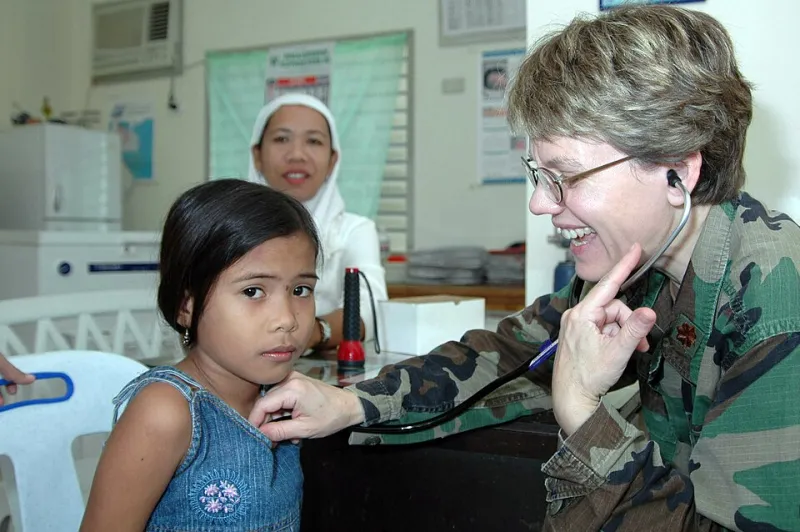
Photo: U.S. Navy photo by Journalist Seaman Joseph Caballero, Public domain, via Wikimedia Commons
Parenting comes with an endless stream of questions, and few are more anxiety-inducing than wondering whether something is truly wrong with your child. Every cough, rash, or mood change can send a parent spiraling through late-night internet searches. The reassuring truth is that most childhood ailments resolve on their own — but some signs deserve prompt medical attention, even when your child appears outwardly healthy.
At Tirpude Hospital, our pediatric care team works with families every day to distinguish between normal developmental variation and the early signals of a condition that warrants professional evaluation. Below, we outline five key indicators that it may be time to schedule a checkup — and explain why routine preventive visits are just as important as appointments prompted by illness.
1. Your Child Is Missing Developmental Milestones
Children develop at their own pace, and there is meaningful variation in when individual kids reach certain skills. That said, developmental milestones exist for a reason: they represent the range within which most children acquire language, motor skills, social awareness, and cognitive abilities. When a child consistently falls outside that range, early evaluation can be transformative.
The American Academy of Pediatrics (AAP) recommends developmental screenings at well-child visits at 9 months, 18 months, and 24 or 30 months, with autism-specific screening at 18 and 24 months. But parents should not wait for a scheduled visit if they notice concerning patterns between appointments.
Signs worth discussing with a pediatrician include:
- Not babbling or using simple words by 12 to 15 months
- Difficulty walking steadily by 18 months
- Limited eye contact or social engagement
- Regression in previously acquired skills, such as losing the ability to speak words a child once used regularly
Early intervention services — including speech therapy, occupational therapy, and behavioral support — are significantly more effective when started during the preschool years. A checkup today could open the door to resources that reshape your child's developmental trajectory.
2. You've Noticed Significant Changes in Behavior or Mood
Children communicate distress through behavior long before they have the vocabulary to articulate what they are feeling. A previously outgoing child who suddenly withdraws from friends and family, a typically calm child who becomes persistently irritable, or a student whose grades drop sharply without explanation — these shifts are the body and mind's way of signaling that something has changed.
Behavioral changes can stem from a wide range of causes, including anxiety, depression, learning differences, social difficulties at school, or even undiagnosed physical conditions such as thyroid disorders or anemia. A pediatric appointment provides an opportunity to rule out medical contributors and, if needed, connect your family with a behavioral health specialist.
"Parents know their children better than anyone," notes the pediatric team at Tirpude Hospital. "If something feels off — even if you cannot quite put your finger on what it is — trust that instinct and make the call. We would always rather reassure a worried parent than miss an opportunity for early support."
3. Growth Patterns Seem Unusual
Children grow rapidly during the first years of life and then more gradually through childhood and into adolescence. Pediatricians track height, weight, and head circumference on standardized growth charts to identify patterns that fall outside the expected range for a child's age and sex.
While some children are naturally smaller or larger than their peers, sudden shifts in growth trajectory — such as a child who was consistently at the 50th percentile for weight dropping to the 10th percentile without explanation — warrant investigation. Similarly, unusually rapid weight gain, particularly in school-age children, may indicate hormonal, nutritional, or lifestyle factors that a pediatrician can help address.
Growth concerns are rarely cause for alarm on their own, but they serve as useful data points that, when reviewed alongside other information, can illuminate underlying health considerations. This is one reason why consistent well-child visits — not just sick visits — are so valuable: they create a longitudinal record that makes deviations easier to spot.
4. Sleep Disruptions Are Persistent and Severe
Occasional sleep struggles are a normal part of childhood. Nightmares, temporary sleep regressions, and adjustment periods during major life changes are all expected. However, chronic sleep difficulties — defined as problems that persist for several weeks and significantly affect daytime functioning — deserve medical attention.
Conditions such as obstructive sleep apnea are more common in children than many parents realize, affecting an estimated 1 to 5 percent of kids in the United States. Loud snoring, pauses in breathing during sleep, restless sleeping, and excessive daytime sleepiness are hallmark signs. Left untreated, pediatric sleep apnea can affect cognitive development, behavior, and cardiovascular health.
Other sleep-related concerns worth raising with a pediatrician include night terrors that occur frequently, sleepwalking, difficulty falling asleep paired with significant anxiety, and bedwetting that persists beyond age seven.
5. Your Child Has Not Had a Well-Child Visit in Over a Year
This sign may seem less dramatic than the others, but it is arguably the most important. Preventive care — not reactive care — is the foundation of lifelong health. Well-child visits allow pediatricians to administer age-appropriate vaccinations, screen for vision and hearing problems, monitor growth and development, assess nutritional status, and discuss age-specific safety topics with parents.
The AAP recommends well-child visits at birth, 3 to 5 days after birth, and then at 1, 2, 4, 6, 9, 12, 15, 18, and 24 months — followed by annual visits from ages 3 through 21. Despite these clear guidelines, many families fall behind, particularly during busy periods or following changes in insurance coverage.
If your child has not had a checkup in the past year, now is a good time to schedule one — even if they appear perfectly healthy. Conditions such as elevated blood pressure, vision problems, and iron deficiency anemia often produce no obvious symptoms in children, yet they can be identified and addressed during a routine visit.
Making Pediatric Care a Priority at Tirpude Hospital
At Tirpude Hospital, our pediatric team is dedicated to partnering with families at every stage of a child's development. From newborn care through adolescence, we provide comprehensive well-child services, developmental screenings, behavioral health referrals, and same-day sick visits for acute concerns.
We understand that busy schedules, insurance questions, and uncertainty about whether a concern is "serious enough" can all delay care. Our care coordinators are available to help navigate these obstacles and ensure that every child in our community has access to the attentive, compassionate medical support they deserve.
If any of the signs above resonate with you, do not wait for the situation to escalate. Contact Tirpude Hospital today to schedule a pediatric appointment. Because when it comes to your child's health, early action is always the right call.